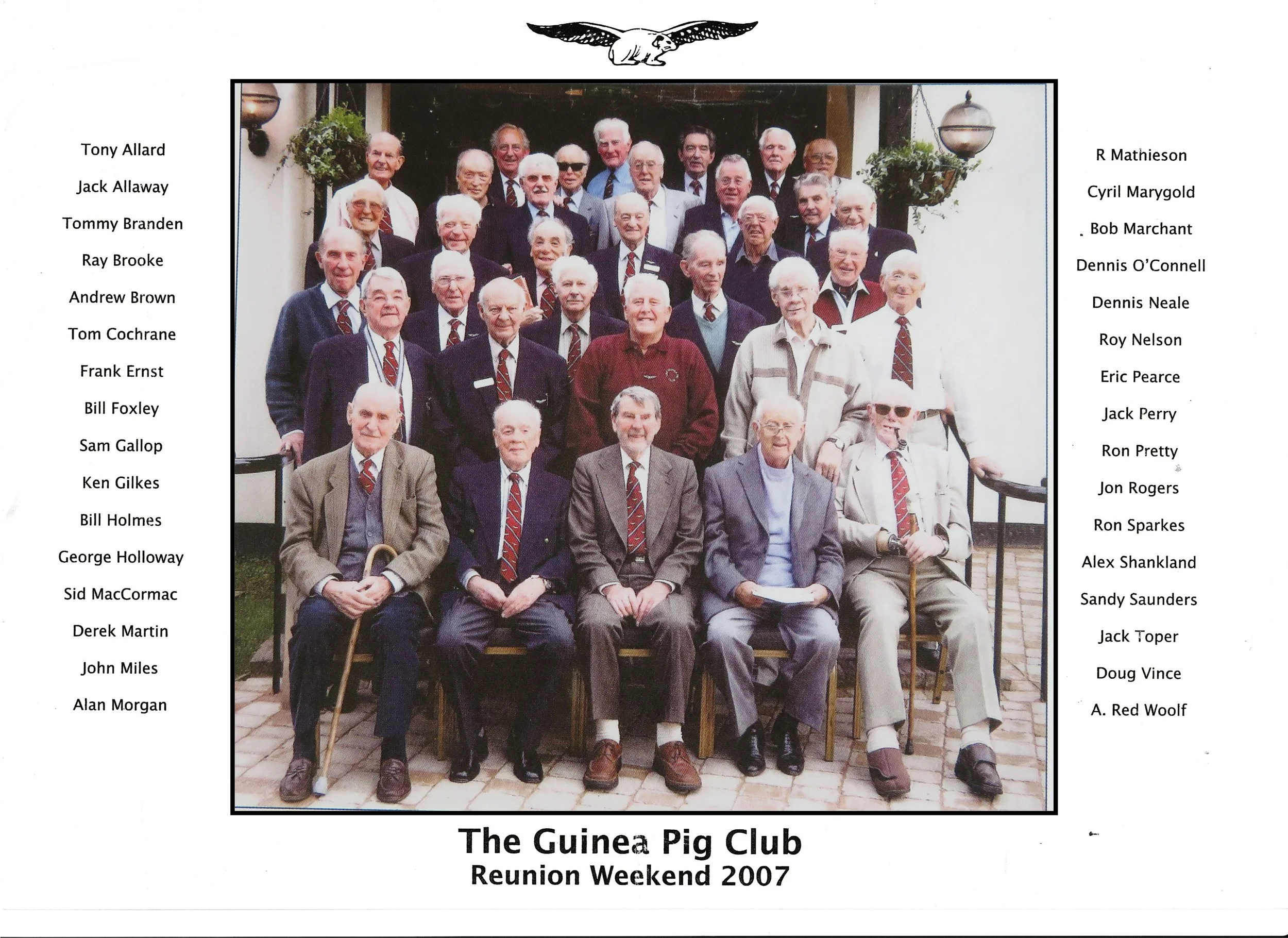
The Guinea Pig Club
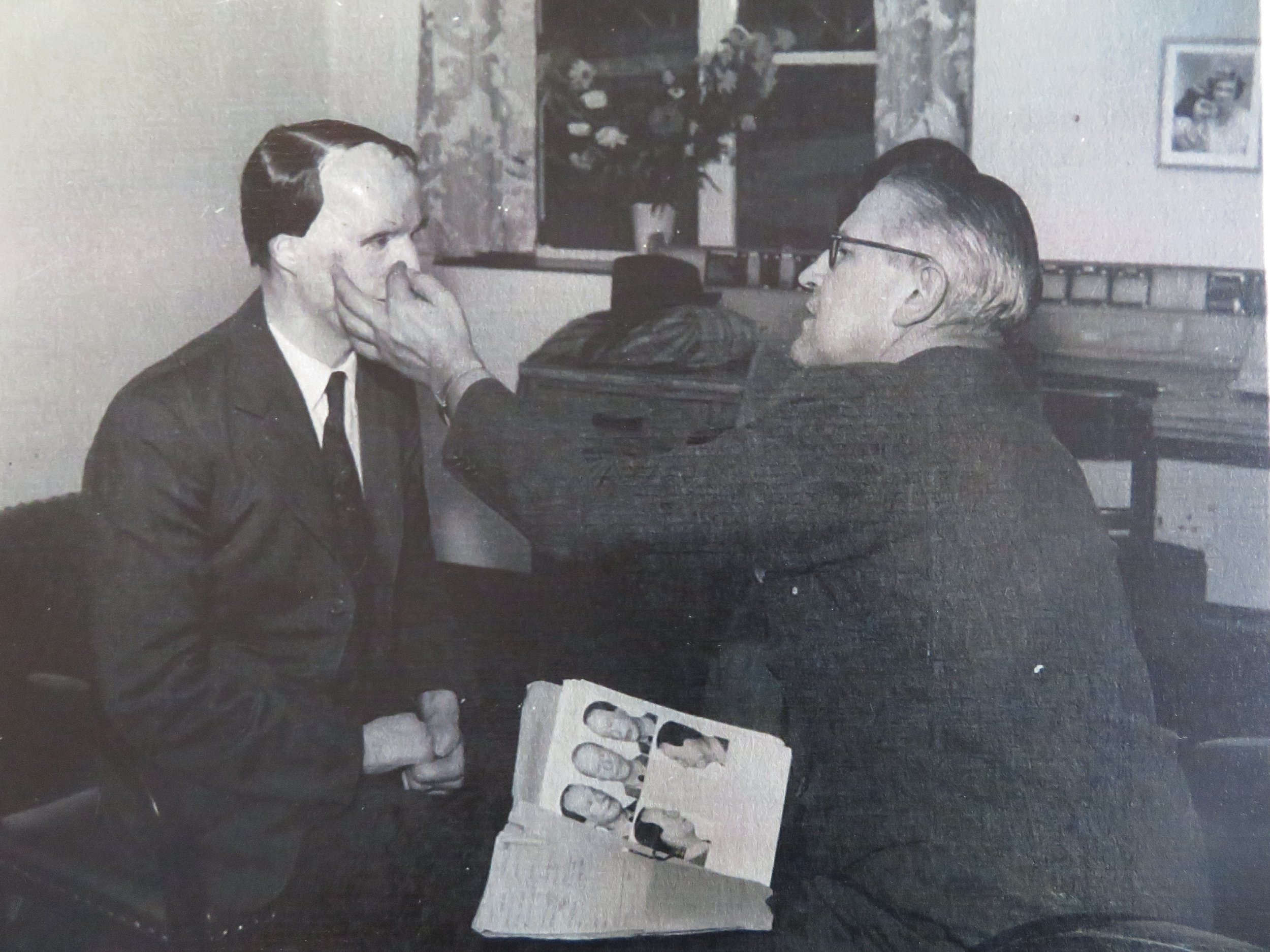
by kind permission of East Grinstead Museum
Guinea pigs. That was the name they gave themselves. They were the pilots and aircrew of the RAF who were badly burnt during the 2nd World War (1941-1945). They had arrived at Queen Victoria Hospital, East Grinstead to be looked after by the brilliant plastic surgeon Sir Archibald McIndoe and his dedicated teams. These burnt men were guinea pigs for new and rapidly developing plastic surgery techniques.
The Founding Members
The Club was formed on Sunday 20th July 1941. Around 40 patients attended its first meeting: M Coote, G Edmunds, G Page, J Hughes, M Wilton, F Overeijnder, Gardiner, J Russell, F Davies, R Fraser, C Hunter, Eckoff, Morley, Livingstone, C McLeod, Mappin, R Clarkson, Bodenham, W Dewar, Shepherd, E Lock, R Hillary, J Fleming, A Lord, P Hart, Langdale, G Bennions, L Harrison, G Butcher, F Truhlar, J Koukal, B Noble, J Mann, E Krasnodebski, J MacPhail, A Banham and R Smith-Barry and elected the following Committee Officers:
Life President: Mr A H McIndoe FRCS
Chief Guinea Pig: Sqdn Ldr T Gleave
Secretary: F/O W Towers-Perkins
Treasurer: P/O P C Weeks
Membership was open to:
The Guinea Pigs: anyone who had undergone more than two operations at Queen Victoria Hospital for burns or aircrash injuries.
The professionals, doctors, surgeons, and medical staff at Queen Victoria Hospital operating on aircrew.
The friends and benefactors to the Club or Guinea Pigs could be invited as honorary members.
And so it began, with some humour, always a part of the care they received, they chose a Secretary because his badly burnt fingers meant he could not write any minutes, and a Treasurer because his leg wounds would stop him running away with the funds! The first annual subscription was 2 shillings and 6d (old pence), the equivalent of about £6.00 today.
By 1945 there were 649 members of this exclusive club. They had all been treated at Queen Victoria Hospital by McIndoe and his team. Typically, they had what was then called “Airman’s Burns”, fanned by high winds these were deep tissue burns to the hands and face. The majority were British, while the remainder were Canadian, Australian, New Zealanders, Czechs, French, Poles, and Americans.
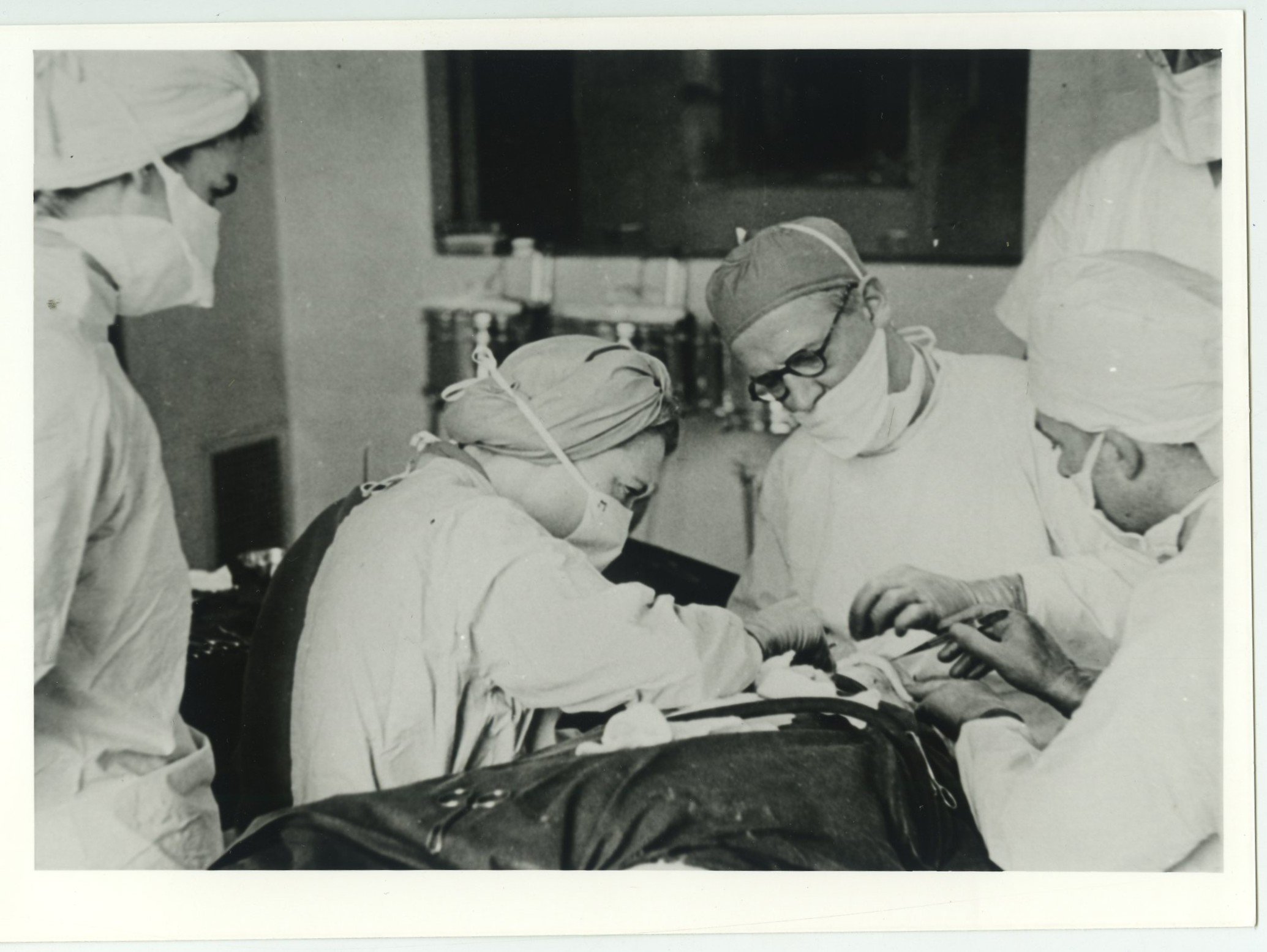
by kind permission of East Grinstead Museum
The Club started as a social support group, one of the first of its kind, for all those at the hospital and those who had been invalided out of the RAF or had returned to active duty. After the war the Club played an important and active role in the rehabilitation and care of its members. The highlight for many was the annual weekend reunion at the Felbridge Hotel near East Grinstead. These weekends had an important purpose beyond the socialising, dining and dancing. McIndoe and his teams would take a close look at all their former patients and check who might be in need of some running repairs.
On the death of Sir Archibald McIndoe in April 1960, the role of President was taken up by the late Prince Philip, Duke of Edinburgh, until April 2021.
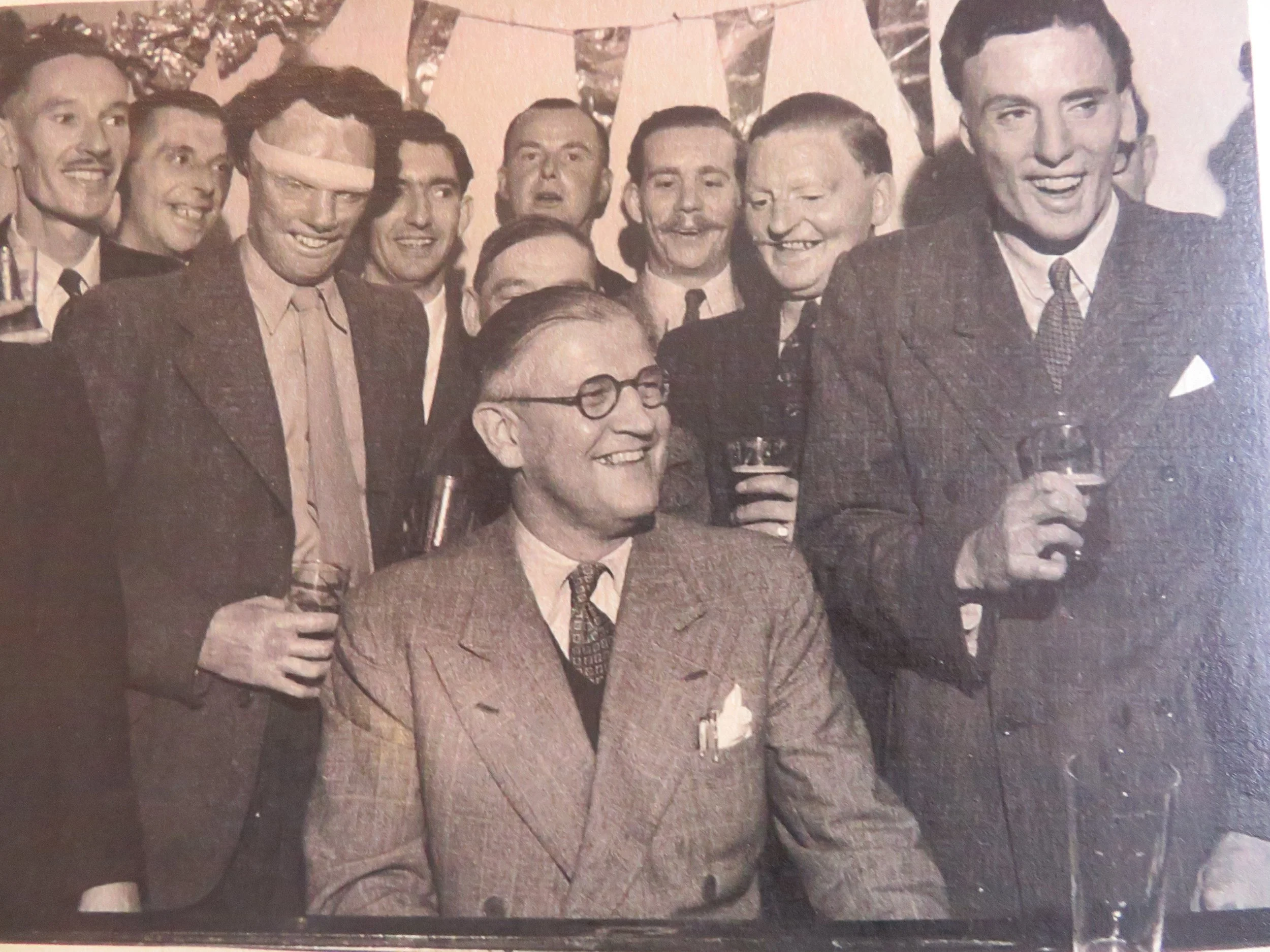
by kind permission of East Grinstead Museum
At the first weekend reunion, a song was launched which became known as The Guinea Pig Anthem with words written by Edward Blacksell, known as “Blackie”, an RAF physical training instructor and subsequently rehabilitation welfare officer for the patients at Queen Victoria Hospital.
The club operated for more than seventy years as a vital social and rehabilitation source. When the trustees, some of whom were Guinea Pigs closed their club charity, the assets were used to establish McIndoe’s Guinea Pigs Memorial Trust. This trust continues to fund groundbreaking research into burns, wound healing and reconstructive surgery techniques to this day.